Protein Labeling Reagents
- (110)
- (1)
- (17)
- (2)
- (1)
- (7)
- (1)
- (38)
- (2)
- (1)
- (17)
- (7)
- (4)
- (15)
- (16)
- (8)
- (2)
- (1)
- (10)
- (5)
- (17)
- (1)
- (2)
- (16)
- (6)
- (6)
- (5)
- (15)
- (89)
- (17)
- (8)
- (66)
- (2)
- (2)
- (38)
- (4)
- (18)
- (3)
- (17)
- (5)
- (6)
- (1)
- (22)
- (2)
- (2)
- (2)
- (6)
- (6)
- (12)
- (27)
- (1)
- (2)
- (1)
- (11)
- (1)
- (4)
- (30)
- (1)
- (1)
- (2)
- (8)
- (6)
- (5)
- (5)
- (5)
- (5)
- (1)
- (6)
- (47)
- (2)
- (3)
- (3)
- (5)
- (5)
- (41)
- (44)
- (35)
Filtered Search Results
Biotium CD48(156-4H9), CF568 conjugate, 0.1mg/mL
Reacts with human CD48, a 45 kDa glycosyl phophatidyl-inositol (GPI)-anchored cell surface protein. CD48 is strongly expressed on lymphocytes and monocytes and weakly on granulocytes but is absent on platelets, fibroblasts, epithelium and endothelium. CD48 is one of marker for detecting the defects of GPI anchoring structure on the patients with paroxysmal nocturnal hemoglobulinuria (PNH) and serves as a low affinity ligand for CD2.Primary antibodies are available purified, or with a selection of fluorescent CF Dyes and other labels. CF Dyes offer exceptional brightness and photostability. Note: Conjugates of blue fluorescent dyes like CF405S and CF405M are not recommended for detecting low abundance targets, because blue dyes have lower fluorescence and can give higher non-specific background than other dye colors.
Non-distribution item offered as a customer accommodation; additional freight charges may apply.
Learn More
Biotium CD36(1E8), CF568 conjugate, 0.1mg/mL
Recognizes a protein of 80 kDa-90 kDa, identified as CD36. It is expressed on platelets, monocytes and macrophages, microvascular endothelial cells, erythrocyte precursors, mammary epithelial cells, and some macrophage derived dendritic cells. CD36 acts as a receptor for thrombospondin (TSP), collagen types I, IV and V, P. falciparum malaria-infected erythrocytes, and sickle erythrocytes. It also functions as a scavenger receptor, mediating macrophage uptake of oxidized low-density lipoprotein (LDL) and recognition of apoptotic polymorphonuclear leukocytes (PMN). CD36 plays a role in platelet aggregation, macrophage foam cell development, inflammation, and the tissue ischemia observed in sickle cell disease and cerebral malaria. Note that 1-4% of Japanese and East Asia population lack CD36.Primary antibodies are available purified, or with a selection of fluorescent CF Dyes and other labels. CF Dyes offer exceptional brightness and photostability. Note: Conjugates of blue
Non-distribution item offered as a customer accommodation; additional freight charges may apply.
Learn More
Biotium CD11a(Cris-3), CF488A conjugate, 0.1mg/mL
Recognizes a protein of 180 kDa, identified as CD11a (Leucocyte Workshop II; Code N202). CD11a complex with the 2 subunit of the integrin family, CD18, to form the cell surface heterodimer, LFA-1 or CD11a /C18 (aLbL). LFA-1 is expressed on all leukocytes including lymphocytes, monocytes, and granulocytes. It is involved in leukocyte adhesion to its ligands including intercellular adhesion molecule-1 (ICAM-1 or CD54), ICAM-2 (CD102), ICAM-3 (CD50) and Telencephalin (TLN) and play a role in most immune/inflammatory responses.Primary antibodies are available purified, or with a selection of fluorescent CF Dyes and other labels. CF Dyes offer exceptional brightness and photostability. Note: Conjugates of blue fluorescent dyes like CF405S and CF405M are not recommended for detecting low abundance targets, because blue dyes have lower fluorescence and can give higher non-specific background than other dye colors.
Non-distribution item offered as a customer accommodation; additional freight charges may apply.
Learn More
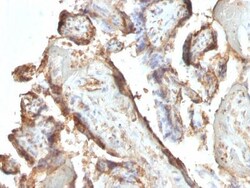
Biotium HCG-beta(hCGb/459), CF568 conjugate, 0.1mg/mL
This MAb reacts with a protein of 22 kDa, identified as β sub-unit of HCG. It does not cross react with the α sub-unit. HCG is a glycoprotein, which is secreted in large quantities by normal trophoblasts. It is present only in trace amounts in non-pregnant urine and sera but rises sharply during pregnancy. HCG is composed of two non-identical, non-covalently linked polypeptide chains designated as the alpha and beta subunits. The alpha subunit is identical to that of thyroid stimulating hormone (TSH), follicle stimulating hormone (FSH), and luteinizing hormone (LH). hCG MAb detects cells and tumors of trophoblastic origin such as choriocarcinoma. Large cell carcinoma and adenocarcinoma of the lung demonstrate anti-hCG positivity in 90% and 60% of cases respectively. 20% of lung squamous cell carcinomas are positive. hCG expression by non-trophoblastic tumors may indicate aggressive behavior.Primary antibodies are available purified, or with a selection of fluoresce
Non-distribution item offered as a customer accommodation; additional freight charges may apply.
Learn More
Biotium CD38(AT1), CF568 conjugate, 0.1mg/mL
CD38 is a type II transmembrane glycoprotein that is present on early B- and T-cell lineages and activated B- and T-cells but is absent from most mature resting peripheral lymphocytes. CD38 is also found on thymocytes, pre-B cells, germinal center B-cells, mitogen-activated T-cells, monocytes and Ig-secreting plasma cells. CD38 is expressed on CD34 cells. The CD34 CD38- population of hematopoietic stems cells defines the most pluripotent cells (e.g. blast colony forming cells).Primary antibodies are available purified, or with a selection of fluorescent CF Dyes and other labels. CF Dyes offer exceptional brightness and photostability. Note: Conjugates of blue fluorescent dyes like CF405S and CF405M are not recommended for detecting low abundance targets, because blue dyes have lower fluorescence and can give higher non-specific background than other dye colors.
Non-distribution item offered as a customer accommodation; additional freight charges may apply.
Learn More
Biotium p53(PAb122), CF488A conjugate, 0.1mg/mL
Mutation and/or allelic loss of p53 is one of the causes of a variety of mesenchymal and epithelial tumors. If it occurs in the germ line, such tumors run in families. p53 Binds to a DNA consensus sequence, the p53 response element, and it regulates normal cell growth cycle events by activating transcription of genes, involved either in progression through the cycle, or causing arrest in G1 when the genome is damaged. In most transformed and tumor cells the concentration of p53 is increased 51000 fold over the minute concentrations (1000 molecules cell) in normal cells, principally due to the increased half-life (4 h) compared to that of the wild-type (20 min). p53 Localizes in the nucleus, but is detectable at the plasma membrane during mitosis and when certain mutations modulate cytoplasmic/nuclear distribution. p53 Is the most commonly mutated gene in spontaneously occurring human cancers. Mutations arise with an average frequency of 70% but incidence varies from zero in c
Non-distribution item offered as a customer accommodation; additional freight charges may apply.
Learn More
Biotium Laminin(A5), CF488A conjugate, 0.1mg/mL
Laminins are large hetero-trimeric, non-collagenous glycoproteins composed of α, β, and γ chains. This MAb reacts with laminin B2/1 chain of ~210 kDa and does not cross-react with other basement membrane components or fibronectin. Its specificity was established by immunoprecipitation and immunofluorescence of human skeletal muscle and kidney with laminin chain-specific MAbs. Epithelial sheets in vivo are separated from the mesenchymal elements of the stroma by a thin layer of a specialized type of extracellular matrix termed the basement membrane (BM). This structure consists of individual components, some of which are ubiquitous in BMs and some are not. The ubiquitous ones comprise laminin (LN), entactin/nidogen (EN), collagen type IV (CIV), and large heparan sulfate proteoglycan (HSPG), which interact specifically with each other to form a continuous and regular BM. Alterations of BM integrity, from local discontinuities up to complete loss, are describe
Non-distribution item offered as a customer accommodation; additional freight charges may apply.
Learn More
Biotium Human IgG Immunoglobulin(IG266), CF568 conjugate, 0.1mg/mL
Recognizes a protein of 75 kDa, identified as γ heavy chain of human immunoglobulins. It does not cross-react with α (IgA), μ (IgM), ε (IgE), or δ (IgD), heavy chains, T-cells, monocytes, granulocytes, or erythrocytes. This MAb is useful in the identification of leukemias, plasmacytomas, and certain non-Hodgkin's lymphomas. The most common feature of these malignancies is the restricted expression of a single heavy chain class. Demonstration of clonality in lymphoid infiltrates indicates that the infiltrate is clonal and therefore malignant.Primary antibodies are available purified, or with a selection of fluorescent CF Dyes and other labels. CF Dyes offer exceptional brightness and photostability. Note: Conjugates of blue fluorescent dyes like CF405S and CF405M are not recommended for detecting low abundance targets, because blue dyes have lower fluorescence and can give higher non-specific background than other dye colors.
Non-distribution item offered as a customer accommodation; additional freight charges may apply.
Learn More
Biotium Podocalyxin(3D3), CF568 conjugate, 0.1mg/mL
Podocalyxin is a member of the CD34 transmembrane sialomucin family. It is highly on kidney podocyte foot projections and plays essential roles in kidney development and homeostasis, blood filtration and urine formation. It is also expressed on vascular endothelia, hematopoietic progenitors and a subset of neurons. Overexpression of podocalyxin may be linked to more aggressive tumor behavior. Podocalyxin antibody can identify podocytes in the urine (podocyturia) that may indicate glomerular disease, pre-eclampsia, and other kidney pathology.Primary antibodies are available purified, or with a selection of fluorescent CF Dyes and other labels. CF Dyes offer exceptional brightness and photostability. Note: Conjugates of blue fluorescent dyes like CF405S and CF405M are not recommended for detecting low abundance targets, because blue dyes have lower fluorescence and can give higher non-specific background than other dye colors.
Non-distribution item offered as a customer accommodation; additional freight charges may apply.
Learn More
Biotium Cytokeratin, multi(C11), CF568 conjugate, 0.1mg/mL
This MAb recognizes cytokeratin 4, 5, 6, 8, 10, 13, and 18. This is a broad-spectrum antibody, which has been reported to differentiate epithelial tumors from non-epithelial tumors. Many studies have shown the usefulness of keratins as markers in cancer research and tumor diagnosis.Primary antibodies are available purified, or with a selection of fluorescent CF Dyes and other labels. CF Dyes offer exceptional brightness and photostability. Note: Conjugates of blue fluorescent dyes like CF405S and CF405M are not recommended for detecting low abundance targets, because blue dyes have lower fluorescence and can give higher non-specific background than other dye colors.
Non-distribution item offered as a customer accommodation; additional freight charges may apply.
Learn More
Biotium CD74(LN-2), CF488A conjugate, 0.1mg/mL
This antibody recognizes a protein of ~35 kDa, identified as CD74 (Workshop IV). CD74 is a type II transmembrane protein which binds to the peptide binding groove of newly synthesized MHC class II alpha/beta heterodimers and prevents their premature association with endogenous polypeptides. CD74 is expressed primarily by antigen presenting cells, such as B-lymphocytes (from before the pre-B cell stage to before the plasma cell stage), macrophages, and monocytes, and many epithelial cells. Anti-CD74 stains predominantly germinal center lymphocytes and B-cell lymphomas, but rarely T-cell lymphomas. Anti-CD74 has been shown to be useful in differentiating atypical fibroxanthoma (-) from malignant fibrous histiocytoma ( ).Primary antibodies are available purified, or with a selection of fluorescent CF Dyes and other labels. CF Dyes offer exceptional brightness and photostability. Note: Conjugates of blue fluorescent dyes like CF405S and CF405M are not recommended for detecti
Non-distribution item offered as a customer accommodation; additional freight charges may apply.
Learn More
Biotium Human IgM Immunoglobulin(IM373), CF568 conjugate, 0.1mg/mL
Recognizes a protein of 75 kDa, identified as mu heavy chain of human immunoglobulins. It does not cross-react with alpha (IgA), gamma (IgG), epsilon (IgE), or delta (IgD), heavy chains, T-cells, monocytes, granulocytes, or erythrocytes. This MAb is useful in the identification of leukemias, plasmacytomas, and certain non-Hodgkin's lymphomas. The most common feature of these malignancies is the restricted expression of a single heavy chain class. Demonstration of clonality in lymphoid infiltrates indicates that the infiltrate is clonal and therefore malignant.Primary antibodies are available purified, or with a selection of fluorescent CF Dyes and other labels. CF Dyes offer exceptional brightness and photostability. Note: Conjugates of blue fluorescent dyes like CF405S and CF405M are not recommended for detecting low abundance targets, because blue dyes have lower fluorescence and can give higher non-specific background than other dye colors.
Non-distribution item offered as a customer accommodation; additional freight charges may apply.
Learn More
Biotium IGF-1(M23), CF568 conjugate, 0.1mg/mL
This antibody is specific to Insulin-like Growth Factor (IGF-1) and shows minimal cross-reaction with IGF-11, Proinsulin, MSF, and Insulin. IGF-1 is a polypeptide growth factor with two isoforms that are produced by alternative splicing. Isoform 1 is also known as IGF-IB while isoform 2 is known as IGF-IA. IGF-1 stimulates the proliferation of a wide range of cell types including muscle, bone and cartilage tissue. It functions as an autocrine regulator of growth. Activation of IGF system has emerged as a key factor for tumor progression and resistance to apoptosis in many cancers like those of breast, thyroid and colon.Primary antibodies are available purified, or with a selection of fluorescent CF Dyes and other labels. CF Dyes offer exceptional brightness and photostability. Note: Conjugates of blue fluorescent dyes like CF405S and CF405M are not recommended for detecting low abundance targets, because blue dyes have lower fluorescence and can give higher non-specific
Non-distribution item offered as a customer accommodation; additional freight charges may apply.
Learn More
Aat Bioquest iFluor™ 488 amine
Small and Specialty Supplier Partner
Small and/or specialty supplier based on Federal laws and SBA requirements.
Learn More
Small and/or specialty supplier based on Federal laws and SBA requirements.
Learn More
Although FITC is still the most popular fluorescent labeling dye for preparing green fluorescent bioconjugates, there are certain limitations with FITC, such as severe photobleaching for microscope imaging and pH-sensitive fluorescence.
Non-distribution item offered as a customer accommodation; additional freight charges may apply.
Learn More
Bachem 6-Carboxy-fluorescein
Small and Specialty Supplier Partner
Small and/or specialty supplier based on Federal laws and SBA requirements.
Learn More
Small and/or specialty supplier based on Federal laws and SBA requirements.
Learn More
6-Carboxy-fluorescein, 3301-79-9, C21H12O7, Mr 376.32, 500mg. 6-FAM, 2-(6-Hydroxy-3-oxo-3H-xanthen-9-yl)-terephthalic acid. Widely used green-fluorescent labeling dye.
Non-distribution item offered as a customer accommodation; additional freight charges may apply.
Learn More